
Short answer: for most Arizona yards, the best trees are desert natives and desert-adapted trees: palo verde, mesquite, desert willow, sweet acacia and Texas ebony. They handle 115°F summers, need far less water than lawn trees once established, and give real shade.
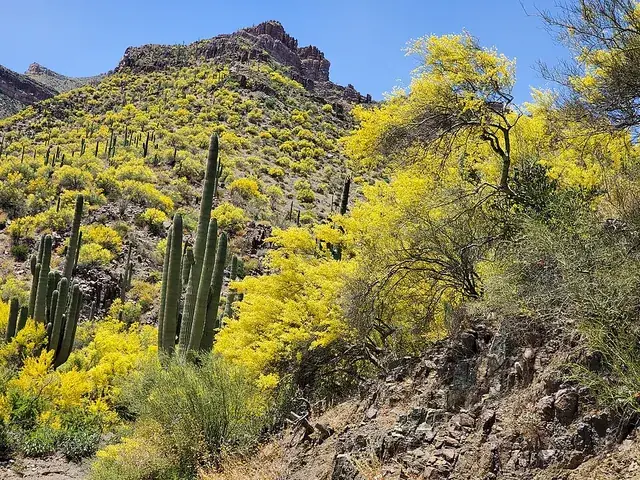
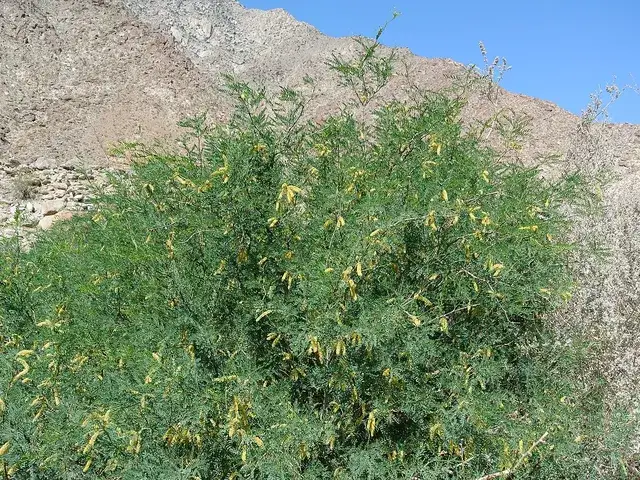
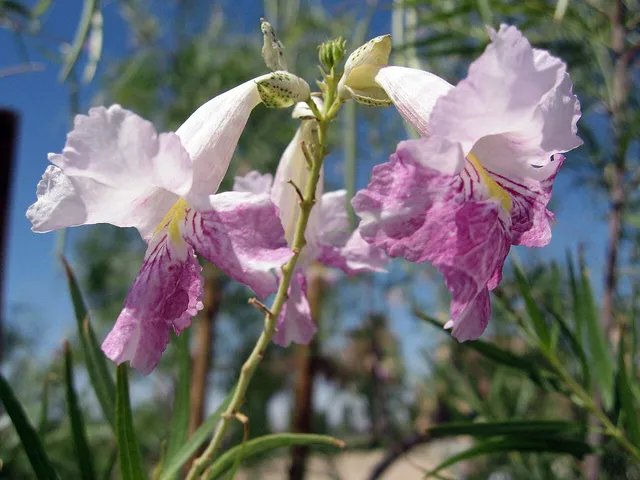
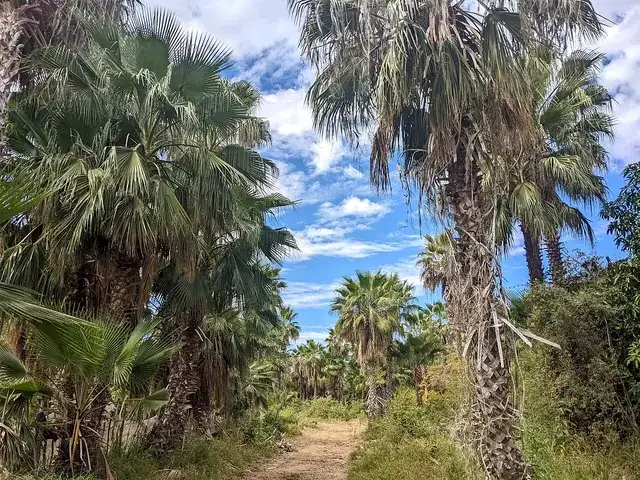
Photos via Wikimedia Commons: palo verde by BLM Arizona (public domain); mesquite by Adbar (CC BY-SA 3.0); desert willow by Robb Hannawacker, NPS (public domain); fan palm by stekkelpak (CC0). Cropped and resized.
7 great trees for Arizona yards
1. Palo verde (including 'Desert Museum')
Arizona's state tree. Green bark, light filtered shade and a burst of yellow flowers in spring. 'Desert Museum' is a popular thornless hybrid that typically grows about 20 to 25 feet tall and wide. Drops lots of small flowers and leaves, so keep it away from pools.
2. Mesquite (velvet, honey, Chilean)
The go-to native shade tree for larger yards, often 20 to 30 feet or more. Deep, infrequent watering and proper thinning (not heavy "lion-tailing") help it stand up to monsoon winds.
3. Desert willow
Not a true willow. Orchid-like pink to purple flowers through the warm months attract hummingbirds. Usually 15 to 25 feet, and it drops its leaves in winter, which lets winter sun through.
4. Sweet acacia
Fragrant puffball yellow flowers in late winter and spring, about 15 to 25 feet. It has thorns, so plant it away from walkways and play areas.
5. Texas ebony
A dense, dark-green evergreen that stays tidy, usually 15 to 25 feet. Thorny branches. A good choice when you want year-round screening.
6. Chaste tree (vitex)
Small and multi-trunk, about 10 to 20 feet, with lavender flower spikes in summer. Works well in smaller yards and courtyards.
7. Mexican fan palm
The classic tall Arizona palm, but it gives little shade and needs yearly frond trimming once it is tall. See palm tree trimming in Arizona before you plant one near the house.
How to choose the right tree
- Check the mature size. Plant for the tree's full width, well away from walls, roofs, pools and power lines.
- Shade the west side. A shade tree on the west or south side of the house blocks the hottest afternoon sun.
- Think about litter. Flower and leaf drop is fine on rock or DG, but a headache in a pool.
- Plant in fall. In the low desert, fall planting gives roots months to grow before summer heat.
- Water deep, not often. Water slowly out at the edge of the canopy, not at the trunk. Once established, desert trees in winter may need water only about once a month. See how to water desert plants.
- Hire a pro for big trees. Large-tree planting, removal and pruning are worth hiring out. Find tree services or landscapers by city.
Trees to think twice about
- Thirsty lawn trees such as many ash, mulberry and pine varieties use much more water and can struggle in the low desert heat.
- Fast growers planted too close to the house or pool. Small at the nursery, big trouble in 5 years.
FAQ
What is the best shade tree for Arizona?
For most yards, mesquite gives the most shade, palo verde gives lighter filtered shade, and desert willow suits smaller spaces. All are desert-adapted and use far less water than lawn trees.
When should I plant trees in Arizona?
In the low desert, fall is the best time to plant so the roots can grow before summer heat.
How often should I water a desert tree in winter?
Established desert trees often need water only about once a month in winter, applied slowly and deeply at the edge of the canopy.
Which trees are messy near a pool?
Palo verde, mesquite and acacia drop small leaves, flowers or pods. Plant them well away from pools.
Keep planning
Sources
- AMWUA: Landscape Plants for the Arizona Desert
- Water Use It Wisely (AMWUA): winter watering tips
- City of Peoria Water Conservation
Sizes are typical mature ranges and vary by variety, water and site. Ask a local nursery or your landscaper what suits your yard.